
Cultivar Energia Program: Community Gardens, Food Security, and Sustainability at Copel
Learn about Copel’s Cultivar Energia Program. Find out how we transform right-of-way corridors into community and private gardens, promoting food security, income generation, and urban sustainability in Paraná.
What is the Cultivar Energia Program?
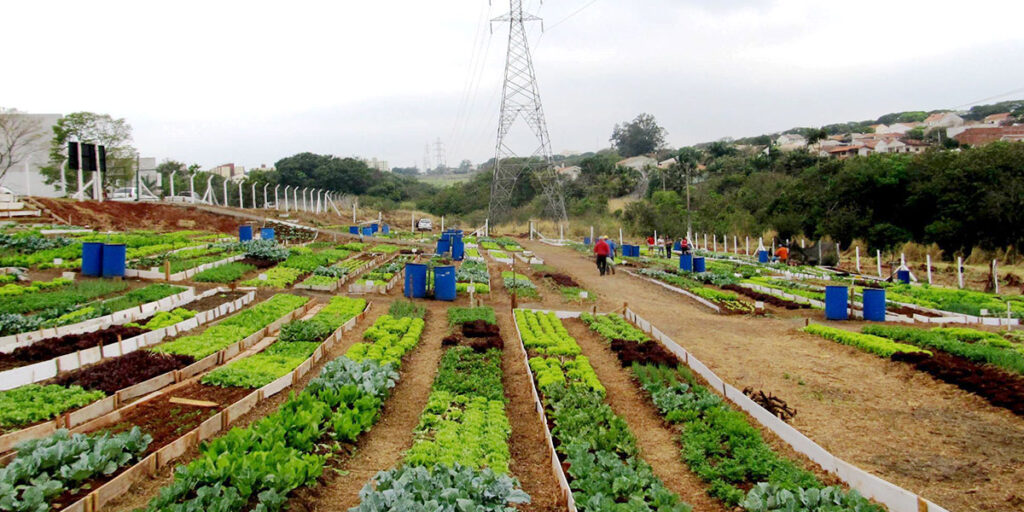
The Cultivar Energia Program is a strategic social and environmental initiative by Copel that promotes the social, productive, and safe use of areas beneath electric power transmission and distribution lines.
Through partnerships with municipal governments, neighborhood associations, and—more recently—directly with residents, the program facilitates the creation of community gardens that transform these urban spaces into sources of socio-environmental benefits for the entire community.
In addition to its social impact, the planned use of these areas serves as an important asset management measure. Monitored cultivation:
- Significantly reduces the incidence of unauthorized occupation and the presence of people in high-risk areas;
- Ensures the operational safety of power lines;
- Reduces land maintenance costs;
- Avoids legal expenses related to eviction proceedings.
The Program’s History and Integration with the SDGs
Cultivar Energia was launched in 2013 as part of Copel’s commitment to act as an agent of social transformation and promote economic development with social and environmental responsibility. Historically, the program has been instrumental in supporting public policies aimed at combating social vulnerability and promoting food security in communities located within the company’s areas of influence.
Currently, the program operates in 12 municipalities in the state of Paraná: Almirante Tamandaré, Apucarana, Cascavel, Curitiba, Francisco Beltrão, Foz do Iguaçu, Londrina, Maringá, Ponta Grossa, São José dos Pinhais, Siqueira Campos, and Umuarama.
Track the growth in the number of families benefiting from the program in recent years:
| Year | 2022 | 2023 | 2024 | 2025 |
| Number of families | 445 | 535 | 657 | 790 |
By promoting the responsible use of urban land, Cultivar Energia fosters income generation, social inclusion, and the improvement of urban spaces. All of its activities are directly aligned with the United Nations (UN) 2030 Agenda, contributing across the board to the following priority Sustainable Development Goals (SDGs):
- SDG 2 – Zero Hunger and Sustainable Agriculture: Access to fresh, pesticide-free food.
- SDG 10 – Reduced Inequalities: Social inclusion and livelihoods for vulnerable families.
- SDG 11 – Sustainable Cities and Communities: Optimization of urban vacant lots within right-of-way corridors and promotion of resilient green spaces.
- SDG 17 – Partnerships and Means of Implementation: Joint efforts between the private sector, local governments, and communities neighboring the assets
The Major Innovation: Private Vegetable Gardens
The year 2025 marked a significant evolution in Cultivar Energia’s management model. To streamline the process and expand the public’s access to productive land, Copel authorized direct partnerships with individuals.
With this innovation, it became possible to establish private vegetable gardens through loan-for-use agreements signed individually by residents of neighboring areas, eliminating the need for municipal government intermediation or formal ties to residents’ associations. This new approach yielded immediate practical results, driving the partnership to establish 25 new private vegetable gardens in Curitiba during the 2025 cycle alone.
By integrating communities into its infrastructure in a participatory manner, Copel reinforces in practice the value that “every customer matters,” demonstrating that the safety of the electrical system and sustainable development go hand in hand to generate long-term shared value in Paraná.
Recognition
Reflecting the impact it has had on the community, the initiative received the Solidarity Seal from the Government of the State of Paraná in 2025, an honorable mention that recognizes the program’s prominent role in meeting the needs of the population.